
A useful forehand is a sequence: organize the feet, create space, turn, accelerate through a clear contact window, and recover.
Start with spacing
The swing cannot solve a positioning problem. Read the ball early and adjust with small steps so contact is neither crowded nor reaching.
Build a repeatable sequence
Let the body turn and the racket organize without forcing a rigid pose. The forward swing should arrive through the contact zone with balance.
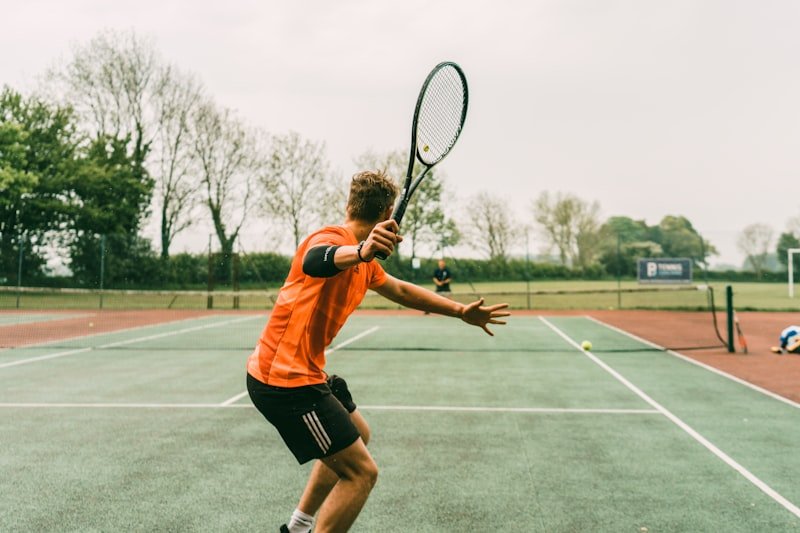
Finish for the next ball
A finish is not decoration. It should leave the player balanced enough to recover and recognize the next shot.
Let natural mechanics organize the swing
A modern forehand should feel athletic rather than robotic. When instructions become a long checklist—turn, point, step, swing, finish—the player can become tense before the ball arrives. A simpler goal is to create enough space for the racket to move naturally and let rhythm organize the sequence.
The racket head can settle below ball height before traveling upward through contact. That drop does not need to be manufactured with a large loop. It can emerge from a relaxed turn, good spacing, and the intention to send the strings through the back of the ball.
Use grip pressure, not a death grip
Tension limits racket-head speed. Hold firmly enough to control the racket, but softly enough that the arm can accelerate without fighting itself. Think of the arm and racket as a connected whip rather than a rigid lever.
A relaxed grip does not mean a passive swing. The legs and body still organize force, but that energy can travel through the arm instead of stopping at a locked shoulder, elbow, or hand.
Choose one useful cue
Simple cues give the player something they can use while the ball is moving. “Relax the arm,” “contact out front,” and “find the ball with the strings” each direct attention toward a clear task without demanding conscious control of every joint.
- 01Relax the armremove unnecessary tension before accelerating.
- 02Contact out frontmeet the ball in a window that preserves space and balance.
- 03Find the ball with the stringsprioritize clean contact over a decorative finish.
- 04Tap the Dogallow a natural racket drop before the upward release.
Power follows sequence
Trying to muscle the ball often slows the racket and pulls the player off balance. Usable power comes from a sequence: prepare with the feet, turn, create space, accelerate through contact, and finish in a position that allows recovery.
That sequence scales across ability levels. A beginner gains a swing that is easier to repeat. An experienced competitor gains a smaller, clearer set of intentions that can survive pressure.
Train the forehand in context
Shadow swings can introduce a feeling, but the stroke must eventually solve a moving-ball problem. Practice reading direction, adjusting with small steps, striking from different heights, and recovering toward the next likely ball. Technique becomes dependable when it stays connected to perception and movement.
For a broader look at how stroke mechanics connect to positioning and recovery, explore the Gleason Tennis coaching philosophy.
Train this on court
Want help putting this into practice?
Jimmy coaches players from beginner through competitive levels through private and small-group instruction in the Gleason Tennis service area.
Keep training
Common questions
Do I need to make a big loop to get racket drop?
No. The racket head can settle below ball height before traveling upward through contact, and that drop does not need to be manufactured with a large loop. It can emerge from a relaxed turn, good spacing, and the intention to send the strings through the back of the ball.
How tightly should I hold the racket?
Hold firmly enough to control the racket, but softly enough that the arm can accelerate without fighting itself. Tension limits racket-head speed, so think of the arm and racket as a connected whip rather than a rigid lever.
Why does my swing break down when I am out of position?
The swing cannot solve a positioning problem. Read the ball early and adjust with small steps so contact is neither crowded nor reaching.
Where should I make contact?
Meet the ball in a window that preserves space and balance — contact out front — and prioritize clean contact over a decorative finish.
Does the follow-through actually matter?
A finish is not decoration. It should leave the player balanced enough to recover and recognize the next shot.