
A reset turns an attacking ball into a neutral one and gives a team time to reach the kitchen together.
Stabilize first
A quiet base and paddle in front make it easier to absorb pace instead of adding more.
Soften the response
Meet the ball with a compact action and reduce rebound energy. The goal is a low bounce in the opponent’s kitchen.
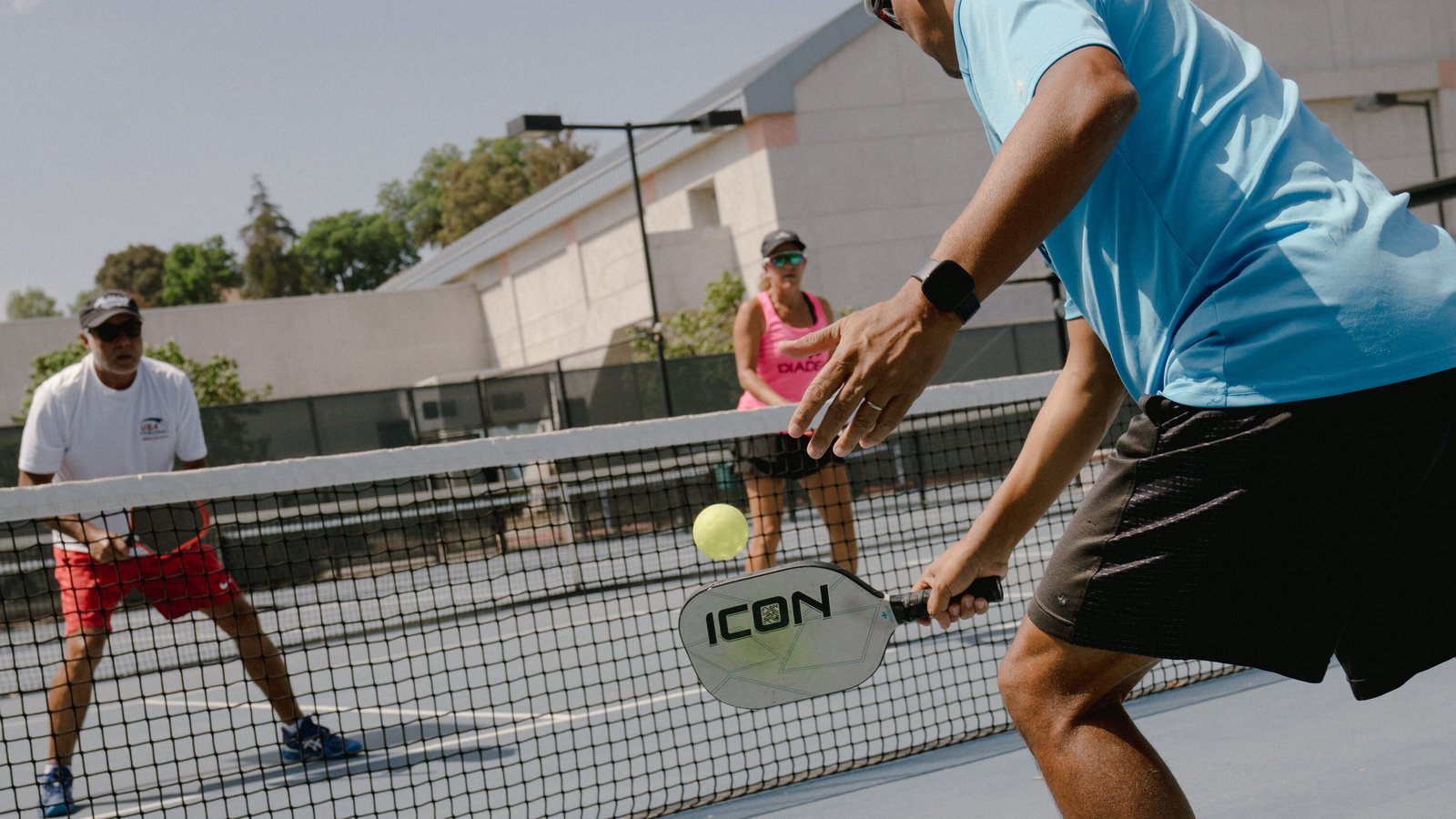
Move as a pair
A successful reset creates permission to advance. Partners should close space together without racing through the transition zone.
Why the reset changes the point
When opponents are established at the kitchen line, a hard ball from below net height often gives them another attacking opportunity. The reset changes that exchange by absorbing pace and dropping the ball into a space where they must contact it from a lower position.
The objective is not to hit a winner. It is to neutralize the attack, earn time, and create a ball that allows you and your partner to improve court position.
Build soft touch from three elements
Relax the grip
A tight hand makes the paddle rebound more energy into the ball. Use light, controlled grip pressure so the paddle can yield slightly at contact. If resets repeatedly pop up, excess tension is one of the first things to check.
Open the paddle face
A ball contacted below net height needs enough lift to clear the net and then fall into the kitchen. Keep the paddle face slightly open and meet the ball in front. The lower the contact, the more carefully the player must manage the angle.
Keep the action compact
A reset is closer to a catch, block, or gentle push than a full swing. Limit the backswing and follow-through. Let the incoming pace supply energy while the hand guides height and direction.
Reset or counter?
Decision-making matters as much as touch. Reset when the ball is low, when balance is compromised, or when the opponents have the advantage at the kitchen. Counter or drive when the ball is above net height, the body is stable, and a clear attacking space is available.
Trying to attack every transition ball creates rushed errors. Resetting every attackable ball gives away opportunities. The skill is recognizing which situation is in front of you.
For players coming from tennis
Tennis players often arrive with strong hand-eye coordination and confident groundstrokes. The adjustment is learning when a shorter backswing and softer hand produce the better result. Think of a controlled half-volley: get low with the legs, keep the paddle in front, and trust a small motion.
Practice the transition
Have a partner feed firm balls toward your feet while you begin near the baseline. Absorb each feed into the kitchen, take one balanced step forward, then prepare for the next ball. Continue reset by reset until you reach the kitchen line.
The quality of the ball determines whether you advance. If the reset sits high, hold position and prepare again. This trains patience alongside touch and keeps both partners moving together.
See the reset arc within the full coaching philosophy, or explore dedicated pickleball lessons.
Train this on court
Want help grooving the reset?
Soft hands are easiest to build with live feeds and a partner moving with you. Jimmy coaches players from beginner through competitive levels through private and small-group instruction, based in Laguna Hills and coaching across Orange County communities.
Keep training
Common questions
What is a kitchen reset actually trying to do?
The objective is not to hit a winner. It is to neutralize the attack, earn time, and create a ball that allows you and your partner to improve court position.
Why do my resets keep popping up?
A tight hand makes the paddle rebound more energy into the ball. Use light, controlled grip pressure so the paddle can yield slightly at contact. If resets repeatedly pop up, excess tension is one of the first things to check.
How big should the swing be?
A reset is closer to a catch, block, or gentle push than a full swing. Limit the backswing and follow-through, and let the incoming pace supply the energy.
When should I reset instead of driving?
Reset when the ball is low, when balance is compromised, or when the opponents have the advantage at the kitchen. Counter or drive when the ball is above net height, the body is stable, and a clear attacking space is available.
I play tennis. What is the biggest adjustment?
The adjustment is learning when a shorter backswing and softer hand produce the better result. Think of a controlled half-volley: get low with the legs, keep the paddle in front, and trust a small motion.